
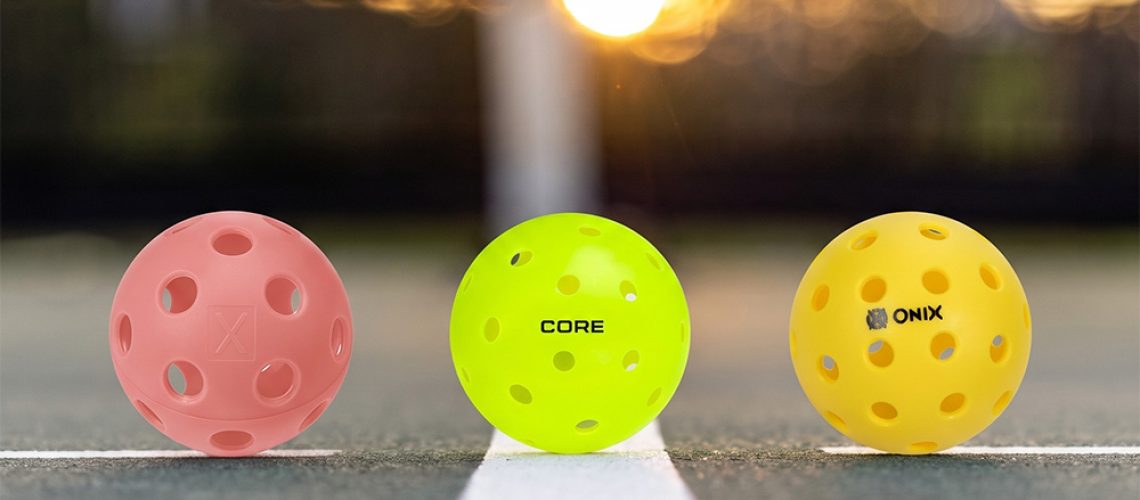

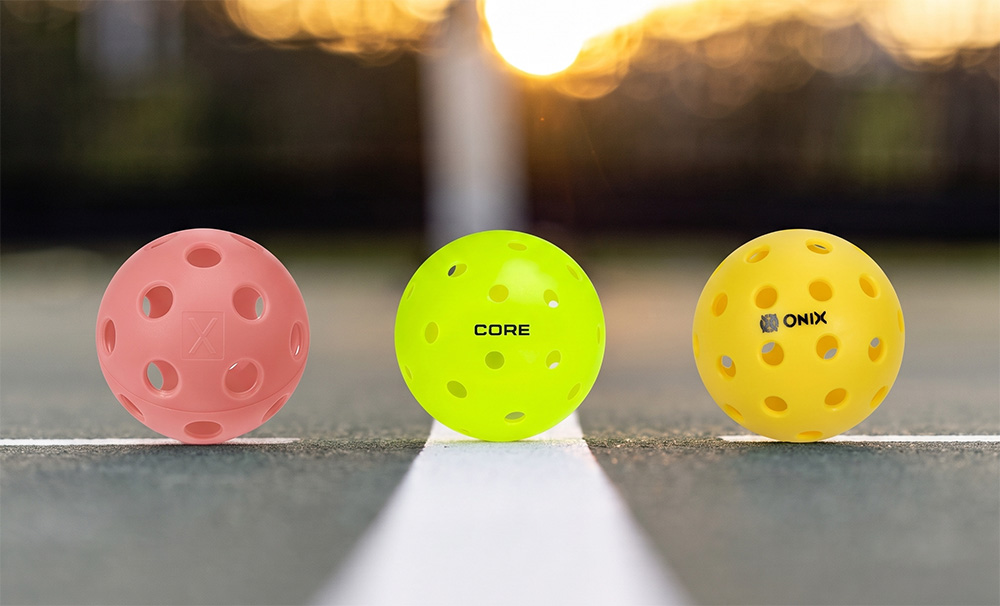
Pick up an indoor pickleball and an outdoor pickleball and they look nearly identical. Drop them on concrete and you will know which is which within two bounces. The outdoor ball responds predictably. The indoor ball thunks and skids. That difference follows you through every rally, and if you have ever played an outdoor session with the wrong ball, you felt it immediately.
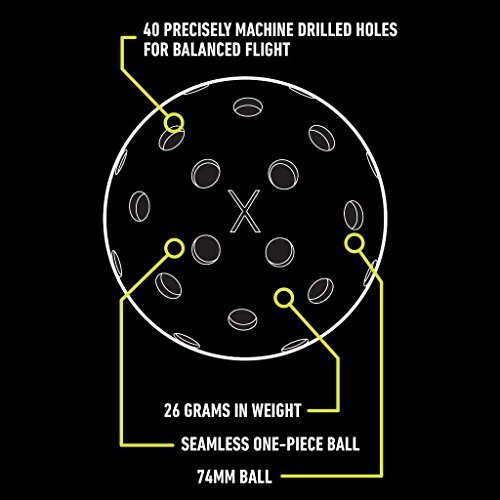
Outdoor balls have 40 smaller holes to cut through wind, a harder shell to handle asphalt and concrete, and slightly more weight. Indoor balls have 26 larger holes, a softer lighter shell, and a bounce tuned for smooth gym floors. These are not interchangeable. Using the wrong ball on the wrong surface does not just feel off, it changes what shots are even possible.
The six balls here cover the main use cases: recreational outdoor play, competitive outdoor tournaments, durability on rough surfaces, and three indoor options at different price points. All six are USAPA-approved. Where you play most often tells you which section to read first.
Quick Picks
| Role | Product | Buy |
|---|---|---|
| Best Overall | Franklin Sports X-40 Outdoor Pickleball | Check on Amazon → |
| Best Budget | GAMMA Photon Indoor Pickleball | Check on Amazon → |
| Best Premium | Onix Dura Fast 40 Outdoor Pickleball | Check on Amazon → |
At a Glance
| Product | Best For | Price | Type | Buy |
|---|---|---|---|---|
| Franklin Sports X-40 | Best Overall Outdoor | Check price | Outdoor | Amazon → |
| Onix Dura Fast 40 | Best for Competitive Outdoor | Check price | Outdoor | Amazon → |
| CORE Crack-Resistant | Most Durable Outdoor | Check price | Outdoor | Amazon → |
| Onix Fuse Indoor | Best Overall Indoor | Check price | Indoor | Amazon → |
| Franklin Sports X-26 | Best for Recreational Indoor | Check price | Indoor | Amazon → |
| GAMMA Photon Indoor | Best Value Indoor | Check price | Indoor | Amazon → |
1. Franklin Sports X-40: Best Overall Outdoor
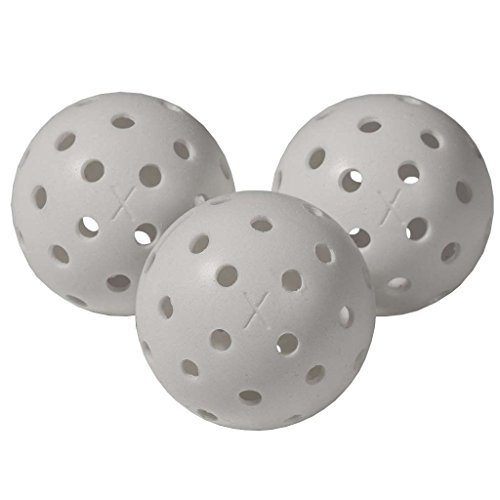
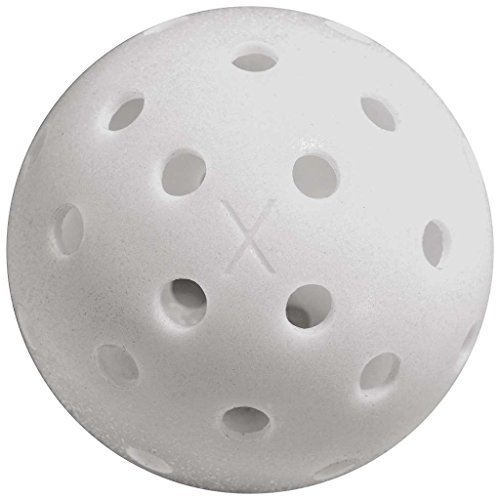
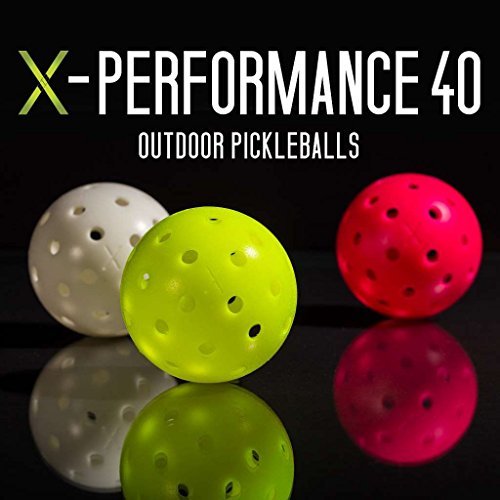
The X-40 is the official ball of USA Pickleball and the US Open. You will see it on the majority of recreational and club courts in the country. The softer shell (94 lb/in stiffness) makes it slightly slower than the Dura Fast 40. For recreational play where rallies matter more than raw pace, that is an advantage, not a drawback.
At club sessions, the X-40 rewards placement over power. Kitchen rallies develop properly. Drives do not arrive faster than you can react, and the softer feel cushions mishits when your mechanics are still coming together.
One real limitation: the X-40 loses firmness above 90 degrees F. On a midday summer court in Florida or Arizona, it can feel mushy by the second hour. In those conditions, the Dura Fast 40 handles heat better. For everyone playing in moderate temperatures, this is the ball to start with.
| ✓ Pros | ✗ Cons |
|---|---|
| Official ball of USA Pickleball and the US Open | Loses firmness above 90 degrees F in hot weather |
| Softer feel rewards kitchen play and placement-focused doubles | Slower pace may not suit baseline power players |
| Forgiving on mishits, good fit for players still refining their mechanics | |
| Most widely available outdoor ball in the country |
2. Onix Dura Fast 40: Best for Competitive Outdoor Play
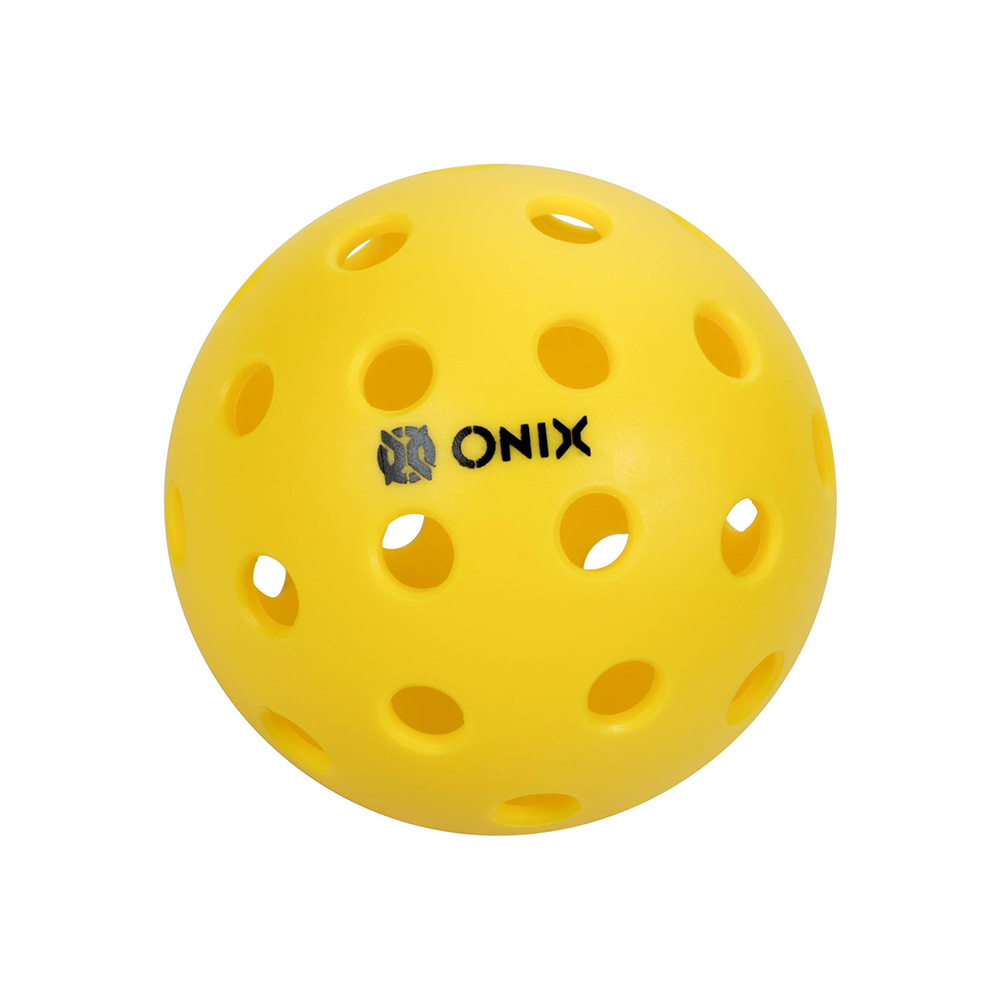
The Dura Fast 40 is the official ball of the PPA Tour and APP Tour. At 130 lb/in stiffness, it is noticeably firmer than the Franklin X-40, which translates to faster drives and cleaner spin off the paddle face. The patented variable hole design (0.26-inch and 0.32-inch holes in the same ball) generates better spin differentiation than uniform-hole designs.
That hardness cuts both ways. If you drive from the baseline and prefer a fast game, this ball suits you better than the X-40. If your game is built around the kitchen, the harder shell can feel punishing over a long session, and the faster pace narrows the margin for error on resets and dinks.
It handles heat well, which is why it dominates tournament play in warmer climates. If you are newer to the game or your points are mostly won and lost at the kitchen line, start with the X-40. The Dura Fast 40 makes more sense once you have the pace under control.
| ✓ Pros | ✗ Cons |
|---|---|
| Official ball of the PPA Tour and APP Tour | Harder feel is punishing for kitchen-heavy or recreational play |
| Firmer and faster than the Franklin X-40 | Faster pace leaves less margin for error on dinks and resets |
| Variable hole design generates better spin differentiation | |
| Handles high temperatures better than most outdoor balls |
3. CORE Crack-Resistant Outdoor: Most Durable Outdoor Ball
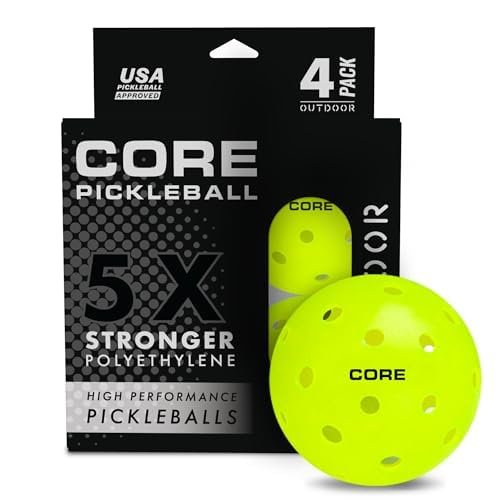
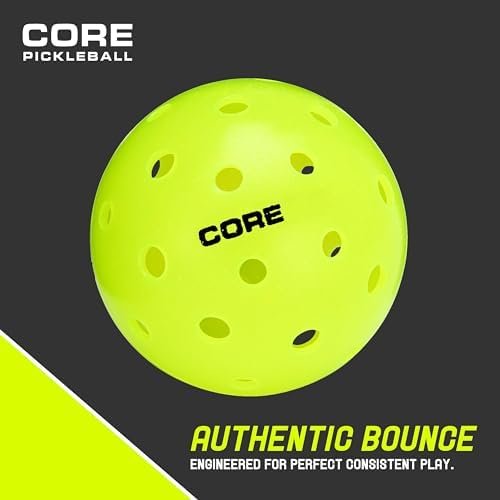
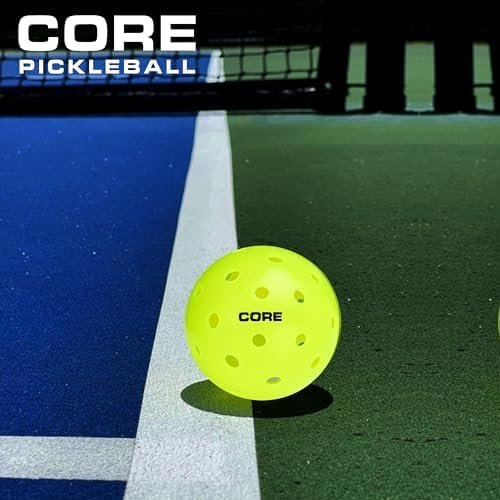
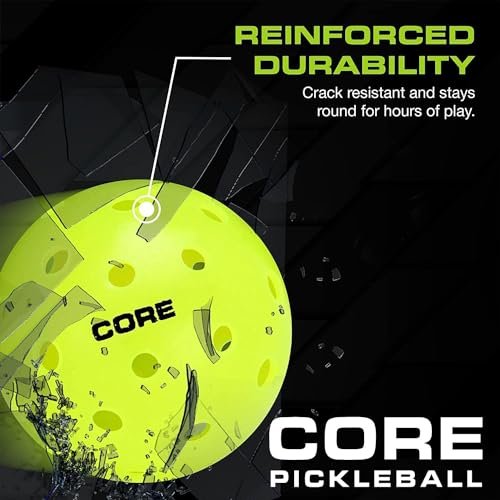
Most outdoor balls crack within 10 to 20 games. The CORE Crack-Resistant runs noticeably longer. Reviewers report 30 or more games per ball, roughly double the typical outdoor lifespan. A reinforced seam and premium resin compound handle high-impact play without splitting at the seams.
It is USAPA-approved and plays similarly to other outdoor balls in terms of speed and feel. This is not the standard choice for tournament settings, where the X-40 and Dura Fast 40 are the norms. For public asphalt courts or club programs going through inventory fast, the lifespan difference is real.
Beginners benefit here too. If you are still mishitting frequently and cracking balls faster than average, the CORE costs less per game over time than cycling through cheaper balls every week.
| ✓ Pros | ✗ Cons |
|---|---|
| Reviewers report 30 or more games per ball, roughly double the typical lifespan | Not the standard ball for major professional tournaments |
| Reinforced seam and premium resin resist cracking on rough surfaces | Will still crack eventually on very rough asphalt with aggressive play |
| USAPA-approved for club and recreational play | |
| Available in bulk packs for club programs |
4. Onix Fuse Indoor: Best Overall Indoor
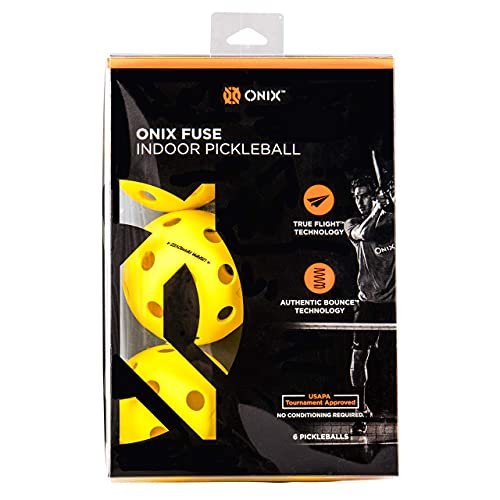
The Fuse Indoor is built specifically for smooth indoor surfaces. Softer shell, 26 holes, and a bounce tuned for wood floors. On a gym surface, it tracks true. An outdoor ball on the same floor would skip and skid, especially off baseline drives.
Extended kitchen rallies are where the difference shows up most. The ball stays in play predictably from the first shot to the last. If you have ever tried to run a dink exchange with an outdoor ball on wood, you know how quickly the ball does something unexpected. The Fuse does not do that.
For regular indoor players, this is the right ball to start with. It appears as the top indoor pick across every major pickleball review source, and the reviews align with how it plays on wood gym floors.
| ✓ Pros | ✗ Cons |
|---|---|
| Consensus top pick for wood gym floors across major review sources | Not suitable for outdoor or rough surfaces |
| True bounce with no skipping or skidding on smooth surfaces | Only available in yellow |
| Soft feel supports extended kitchen rallies and dink play | |
| USAPA-approved |
5. Franklin Sports X-26 Indoor: Best for Recreational Indoor Players
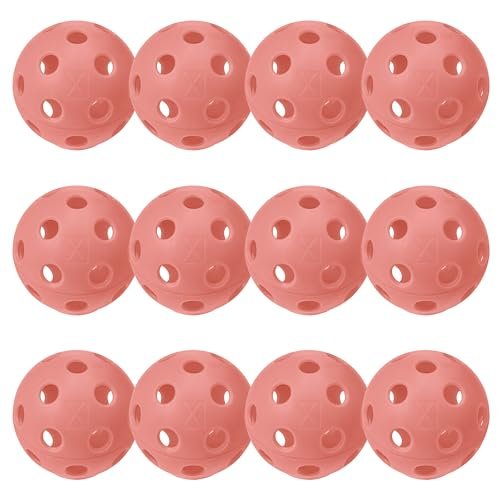
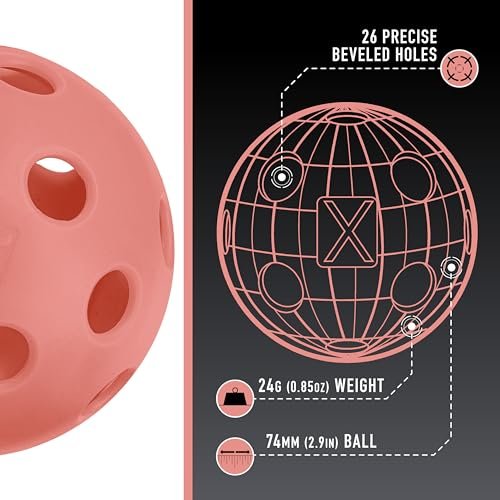
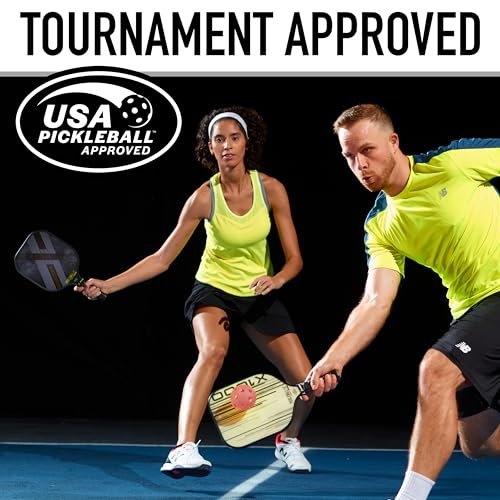
The X-26 is the indoor companion to the X-40. USAPA-approved, stocked at Dick’s Sporting Goods, Target, and most online pickleball retailers. Multiple color options (blue, yellow, lime green, peach) make it useful for facilities that color-code their equipment by court or session type.
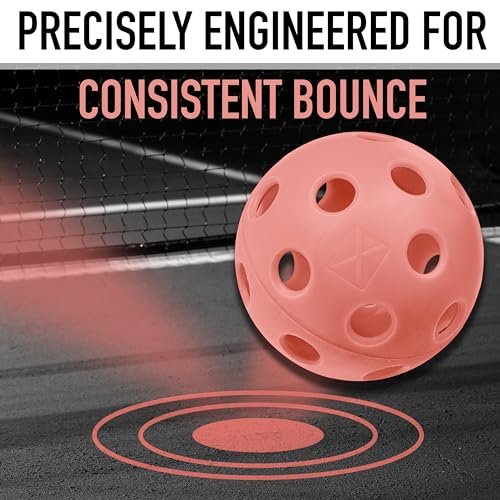
On wood floors it plays well: true bounce and predictable flight. It does not match the Onix Fuse for pure bounce consistency on wood, but the sourcing advantage is significant. If your facility manager needs to restock quickly, the X-26 is easier to find than most alternatives.
A 3-pack covers casual use. A 12-pack is the right buy if you play indoors several times a week. Good starting point for recreational players who are not yet sure how much of their game will shift indoors.
| ✓ Pros | ✗ Cons |
|---|---|
| Most widely available indoor ball, stocked at major sporting goods retailers | Bounce consistency on wood floors slightly behind the Onix Fuse |
| Multiple color options for facilities that color-code equipment | |
| USAPA-approved, available in 3-pack, 12-pack, and 100-pack | |
| Easy to restock quickly through most retailers |
6. GAMMA Photon Indoor: Best Value Indoor
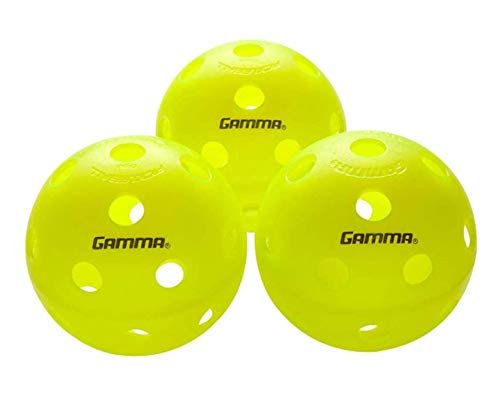
At around $2.83 per ball, the GAMMA Photon costs less than most USAPA-approved alternatives. Two-piece construction, 26 holes, and consistent bounce on wood courts. The lower price does not translate to a performance drop in normal indoor play.
The high-visibility optic green color is useful in gyms with fluorescent lighting, where yellow balls can blend into court lines. If you play in a gym where visibility is a regular issue, the color is a practical advantage worth factoring in.
Best suited to frequent indoor players who buy in bulk. The unit economics favor larger packs, and the ball holds up well across multiple sessions on wood.
| ✓ Pros | ✗ Cons |
|---|---|
| Best value per ball at around $2.83, lowest cost among USAPA-approved indoor options | Less widely known than Franklin or Onix brands |
| High-visibility optic green aids visibility in fluorescent gym lighting | Only available in optic green |
| Two-piece ultra-balanced construction with consistent bounce on wood | |
| USAPA-approved |
Frequently Asked Questions
Can I use an outdoor ball indoors?
You can, but you will notice it right away. Outdoor balls are harder and heavier. On a smooth wood floor, they skip and bounce erratically instead of staying true, and kitchen rallies fall apart quickly. If you play indoors with any regularity, the right ball makes a bigger difference than most players expect before they try both.
What is the difference between 40-hole and 26-hole pickleballs?
Hole count reflects the surface the ball is built for. Outdoor balls have 40 smaller holes to cut through wind and handle rough court surfaces. Indoor balls have 26 larger holes, which produces slower ball speed and a predictable bounce on smooth gym floors. The 40-hole design is also louder, which matters for facilities with noise restrictions.
Why do outdoor pickleballs crack more often than indoor balls?
Harder shells absorb impact from concrete and asphalt repeatedly, which creates stress fractures at the seams over time. Cold temperatures compound the problem: below 50 degrees F, outdoor balls become brittle and crack faster than normal. Warming your balls in your car before a cold-weather session makes a real difference in how long they last.
What about foam or quiet pickleball options?
Foam balls like the GAMMA Librarian are built for noise-sensitive environments: apartment complexes, community centers with thin walls, and indoor courts near living spaces. They play very differently from standard balls and are not used in competitive or serious recreational settings. If noise is your primary constraint, they are worth testing. For everything else, stick to USAPA-approved standard balls.
Is the Franklin X-40 or Onix Dura Fast 40 better?
It depends on how you play and where you live. The X-40 is softer, slower, and better for recreational and kitchen-heavy doubles. The Dura Fast 40 is harder, faster, generates more spin, and handles heat better. Competitive players and baseline drivers tend to prefer the Dura Fast 40. If you are newer to the game or your game is built around the kitchen, start with the X-40.
The verdict
Outdoors, start with the Franklin X-40. It’s the most-played outdoor ball in the country and it handles the widest spread of skill levels and conditions, which makes it the easy default. Two cases where I’d steer you elsewhere. If you drive from the baseline or you’re playing in the heat most weeks, the Onix Dura Fast 40 holds up better. And if your courts are rough and you’re cracking a ball every few sessions, the CORE Crack-Resistant costs you less in the long run.
Indoors, go with the Onix Fuse on wood gym floors. If your facility needs a fast reorder path, the Franklin X-26 makes more sense. And if you’re an indoor regular buying in bulk, the GAMMA Photon is the pick.
Play both outdoor and indoor courts? Buy both balls. Nothing on the market covers both surfaces well, and you’ll feel the compromise within a few points.