

There’s a specific moment that reveals your paddle. You’re at the kitchen line, both players in a hands battle, and a ball comes at your chest at 40 mph. A power paddle blocks it a foot deep, which your opponent drives back harder. A 16mm control paddle absorbs the pace and drops the ball in the kitchen. You win the exchange without doing anything spectacular. The paddle handled it.
Control comes down to dwell time. A 16mm core gives the ball more contact time with the face before it leaves, which is what lets you adjust your angle on a late reset or redirect a body-shot volley. Carbon fiber faces add spin texture on top of that. No marketing copy explains this better than your first kitchen session with a real control paddle.
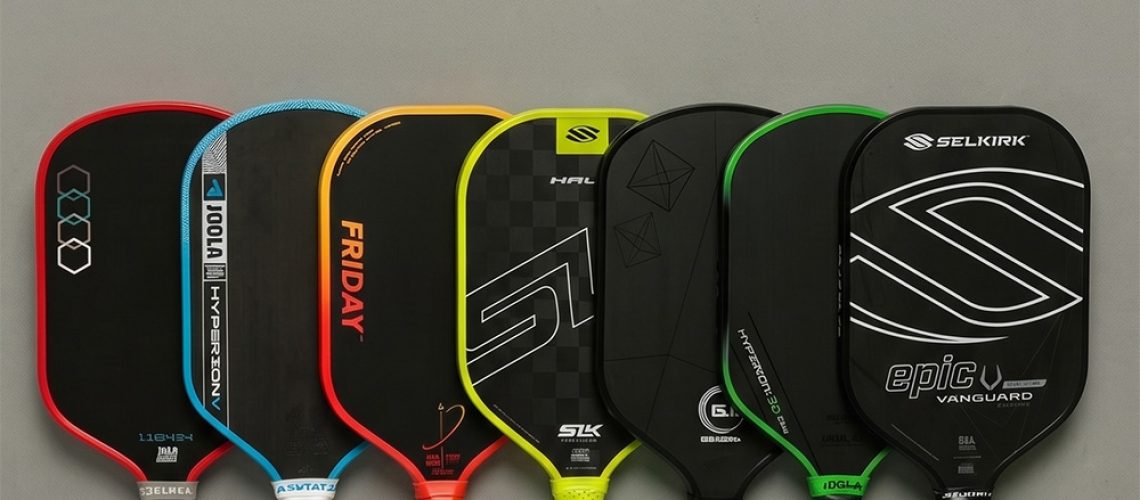
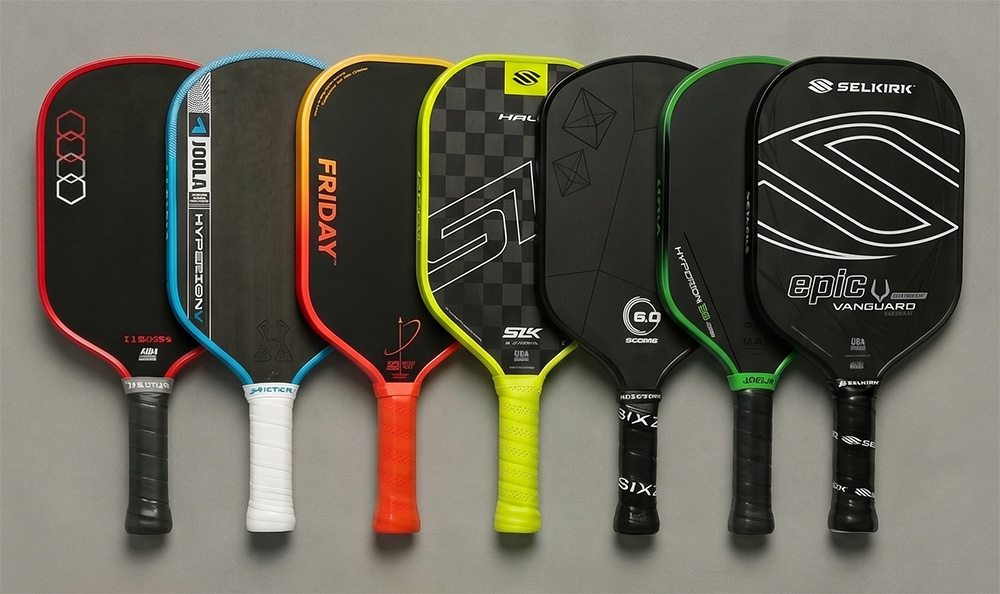
The seven paddles here cover $99 to $300. All use 16mm polymer or foam cores. All have carbon fiber faces. The differences are construction method, shape, and which type of player gets the most out of each one.
Quick Picks
| Role | Product | Buy |
|---|---|---|
| Best Overall | Selkirk Sport Vanguard Control 16mm Epic | Check on Amazon → |
| Best Budget | 11SIX24 Jelly Bean | Check on Amazon → |
| Best Premium | JOOLA Pro V 16mm | Check on Amazon → |
At a Glance
| Product | Best For | Price | Shape | Buy |
|---|---|---|---|---|
| Selkirk Vanguard Control 16mm Epic | Best Overall | Check price | Widebody | Amazon → |
| JOOLA Ben Johns Hyperion 3S | Best for Advanced Players | Check price | Elongated | Amazon → |
| Six Zero Double Black Diamond 16mm | Best Lightweight | Check price | Elongated | Amazon → |
| Selkirk SLK Halo Control Max | Best Mid-Range | Check price | Widebody | Amazon → |
| Friday Aura Gen IV Foam | Best Gen 4 Feel | Check price | Multi-shape | Amazon → |
| JOOLA Pro V 16mm | Best Premium | Check price | Hybrid | Amazon → |
| 11SIX24 Jelly Bean | Best Budget | Check price | Hybrid/Widebody | Amazon → |
1. Selkirk Vanguard Control 16mm Epic – Best Overall
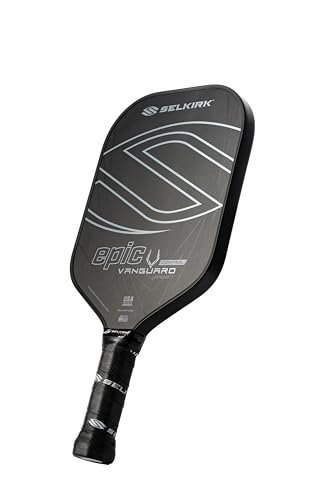
The Vanguard Control is the best kitchen paddle in this lineup, and the four-layer T700 carbon face is the reason. Four layers of carbon create a spin texture that holds up after months of use. Single-layer faces smooth out within a season; this one does not. The X5+ honeycomb core pushes dwell time beyond the standard 16mm baseline, which you feel immediately on third-shot drops.
On fast exchanges at the kitchen, the dwell time is noticeably longer than most carbon paddles at this price. You can take a late swing on a body shot and the ball still tracks where you aimed it. The non-thermoformed construction keeps the feel consistent, so contact toward the edge of the face behaves predictably instead of spraying.
Best suited for 4.0+ players who play kitchen-heavy doubles and want a paddle that rewards soft hands. If you drive from the baseline more than you dink, the Hyperion 3S is built for that game. If $249 is out of reach, the SLK Halo Max delivers similar control at half the price.
| ✓ Pros | ✗ Cons |
|---|---|
| Four-layer quad carbon face holds spin texture over many months of use | At $249, one of the higher-priced options on this list |
| Non-thermoformed construction keeps touch consistent across the face | Players who drive more than they dink will prefer an elongated shape |
| 16mm X5+ core delivers above-average dwell time for resets and drops | |
| Made in USA |
2. JOOLA Ben Johns Hyperion 3S – Best for Advanced Players
The Hyperion 3S is built for reach. The AeroCurve elongated shape puts more face toward the tip, which matters on ATP attempts and erne shots that contact off-center near the head. This is the shape Ben Johns uses in tournament play because that extra reach at the tip changes those shots from hopeful to intentional.
916 RPM spin in lab testing is a real number. The Propulsion Core polymer at 16mm gives enough dwell for kitchen exchanges while still allowing you to load a drive when the opportunity opens. UPA-A certified for competitive play, and the NFC chip authenticates the paddle at events that require it.
This is a 4.0+ paddle. At 3.5, while you’re still building consistent third-shot drops, the elongated shape is less forgiving on kitchen mishits. The SLK Halo Max or the Friday Aura give you a larger sweet spot while you work on that consistency. If you already play at a level where reach and shape differentiation matters, the Hyperion 3S is the benchmark everyone else gets compared against.
| ✓ Pros | ✗ Cons |
|---|---|
| AeroCurve elongated shape adds reach on ATP and erne attempts | Elongated shape is less forgiving on kitchen mishits; not the right pick below 4.0 |
| 916 RPM spin measured in lab testing | $299 sits at the top of the price range in this lineup |
| UPA-A certified for competitive play | |
| 16mm Propulsion Core balances dwell time with enough pop to drive |
3. Six Zero Double Black Diamond 16mm – Best Lightweight
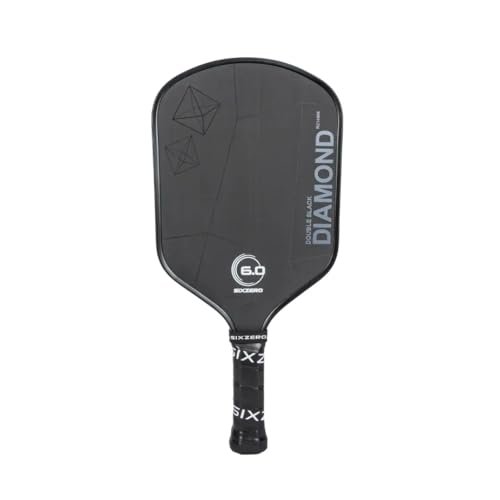
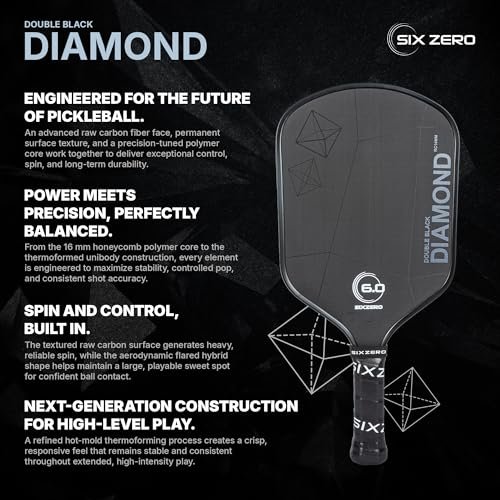
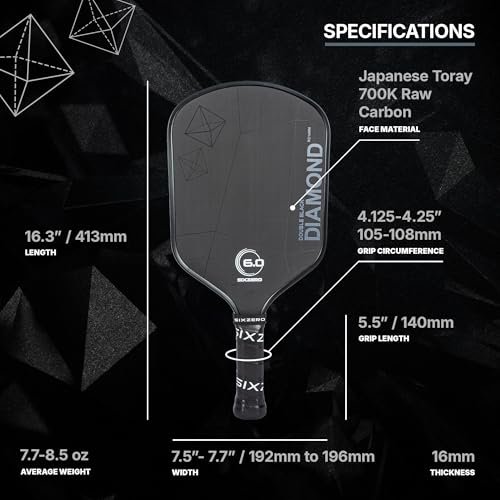
The Double Black Diamond is the lightest paddle in this lineup at 7.7 oz, and that weight difference adds up in a long session. Forearm and elbow fatigue affects your touch at the kitchen before it affects your power game, so a lighter paddle is a practical advantage, not just a spec sheet number.
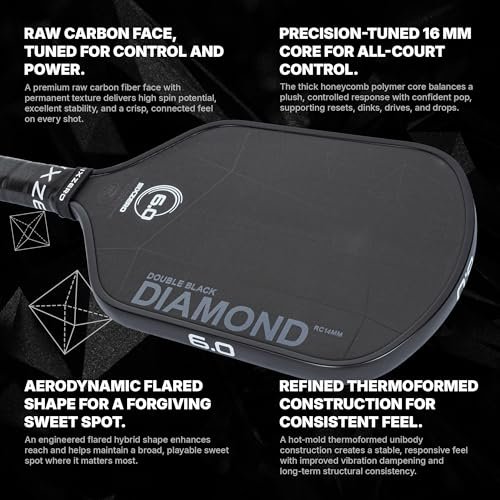
The flared tip design widens the sweet spot toward the head, useful on roll volleys and erne shots that contact off-center. The raw carbon surface has enough texture for spin on drives without feeling abrasive on dinks. The extended grip suits two-handed backhand players who need the extra length.
Best for kitchen-heavy players who notice fatigue building through a long open play session, and for two-handed backhand players who need grip length. If you drive more than you dink, you’ll find 7.7 oz a little light for stable groundstrokes from the baseline. The Hyperion 3S at 8.0 oz suits a more balanced game.
| ✓ Pros | ✗ Cons |
|---|---|
| Lightest paddle in this lineup at 7.7-7.9 oz, reduces fatigue in long sessions | 7.7 oz can feel light on stable groundstrokes from the baseline |
| Flared tip widens sweet spot toward the head for erne and roll volleys | Power-first players who drive frequently will want more weight |
| Extended grip length suits two-handed backhand players | |
| Raw carbon surface delivers spin texture without abrasiveness on dinks |
4. Selkirk SLK Halo Control Max – Best Mid-Range
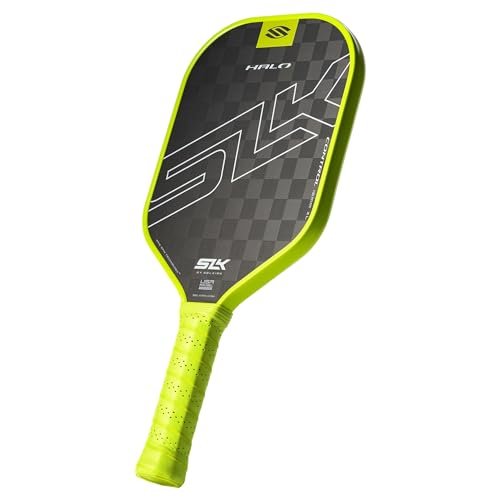
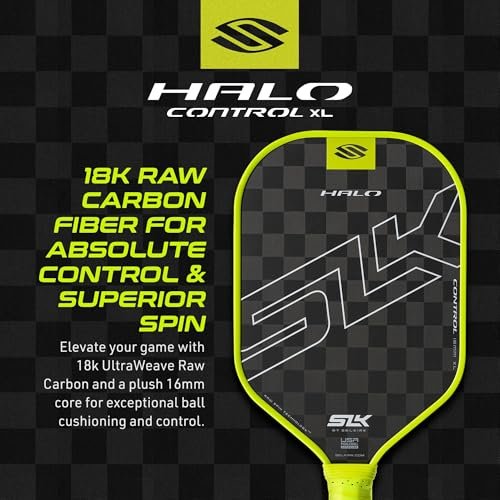
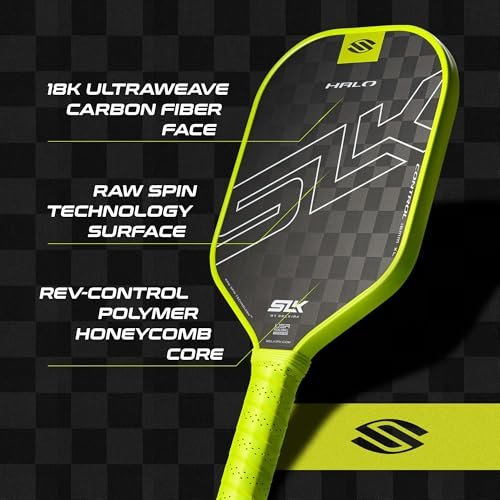
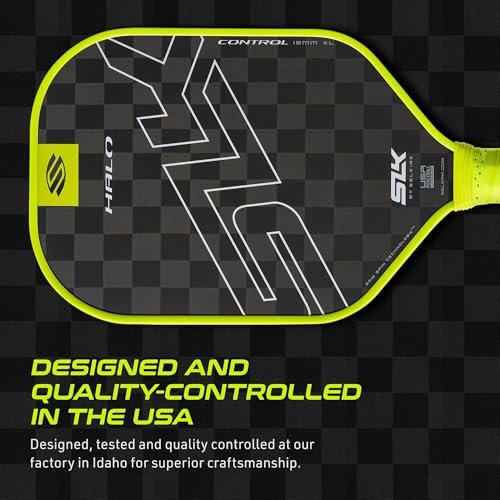
The SLK Halo Control Max is the best value in this lineup. At around $140, you get a genuine 16mm raw carbon paddle, not a fiberglass paddle dressed up with carbon buzzwords.
The Max (widebody) shape gives you the largest sweet spot in this group. That translates directly to more consistent resets on quick kitchen exchanges when you’re not perfectly positioned. Compared to the Vanguard Control, the Halo Max has a wider face, less spin texture, and a $110 lower price. The spin texture advantage on the Vanguard is real. For most club players, it is not $110 of real.
This is the right paddle for 3.5 to 4.0 players who want genuine control performance without spending $250. It also works as a second paddle you leave in your bag for outdoor courts when you don’t want to expose the Vanguard to wind and grit. The faux-leather grip holds up and doesn’t need immediate replacement.
| ✓ Pros | ✗ Cons |
|---|---|
| Largest sweet spot in this lineup (widebody Max shape) for consistent kitchen resets | Less spin texture than the quad carbon Vanguard Control |
| Genuine raw carbon T700 face at an accessible price | Widebody shape sacrifices reach on erne and ATP attempts |
| 16mm Rev-Core Control polymer core at less than half the cost of the Vanguard | |
| Faux-leather grip included and ready to play |
5. Friday Aura Gen IV Foam – Best Gen 4 Feel
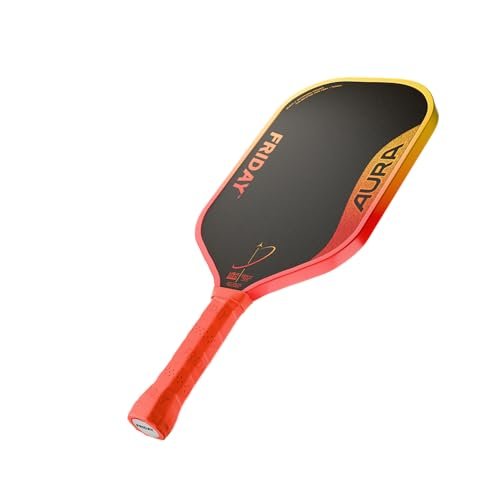
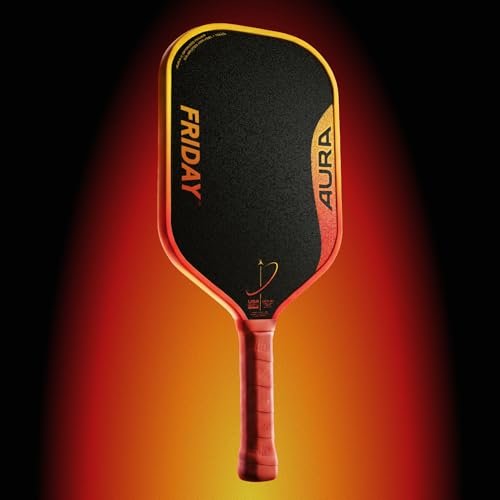
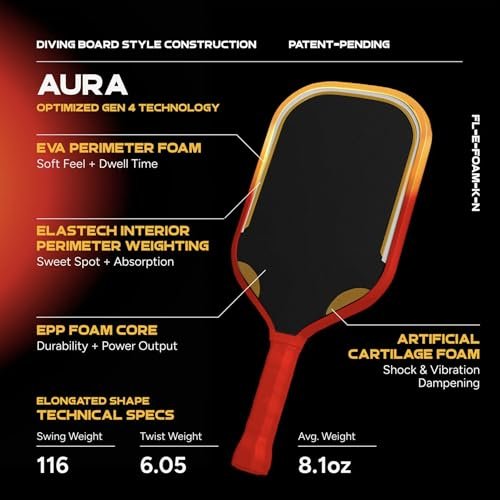
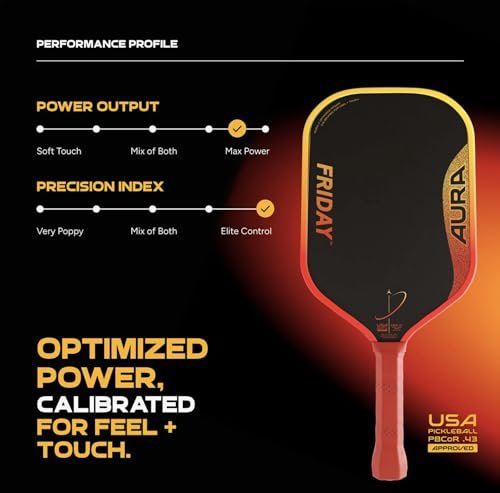
The Friday Aura uses a four-layer foam hybrid core instead of polymer honeycomb, and you feel the difference on your first dink. The dwell time is noticeably longer. A mishit dink that would pop up off a polymer paddle still lands in the kitchen with the Aura. It’s the softest feel in this lineup.
Gen 4 foam construction is replacing Gen 3 thermoformed polymer as the benchmark for touch, and the Aura at $119 is the accessible entry point for that technology. The carbon fiber face adds spin texture so you’re not sacrificing bite for feel. Available in Elongated, Hybrid, and Widebody shapes, so you can pick the geometry that suits your game.
This paddle suits players stepping up from a fiberglass beginner paddle who want a real feel upgrade without spending $200. It also suits kitchen-heavy players who prioritize dwell time over spin RPM. If you’ve been playing with a fiberglass paddle for a year and you want a genuine control paddle, the Aura is the logical next step.
| ✓ Pros | ✗ Cons |
|---|---|
| Softest, most forgiving feel in this lineup from the four-layer foam hybrid core | Foam cores favor feel-focused players over players who prioritize spin RPM |
| Gen 4 foam handles mishit dinks better than polymer honeycomb | Newer brand with less track record than Selkirk or JOOLA |
| Available in three shapes (Elongated, Hybrid, Widebody) | |
| Best control-per-dollar under $150 |
6. JOOLA Pro V 16mm – Best Premium
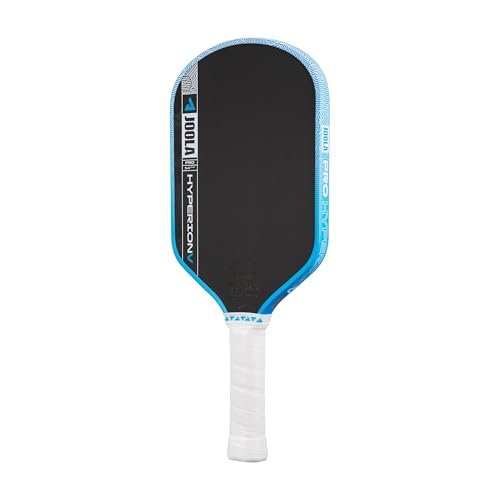
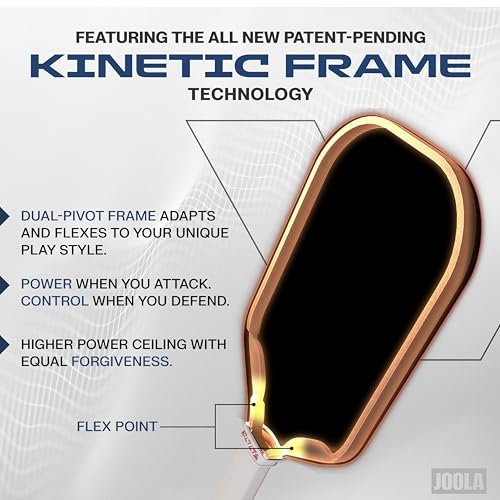
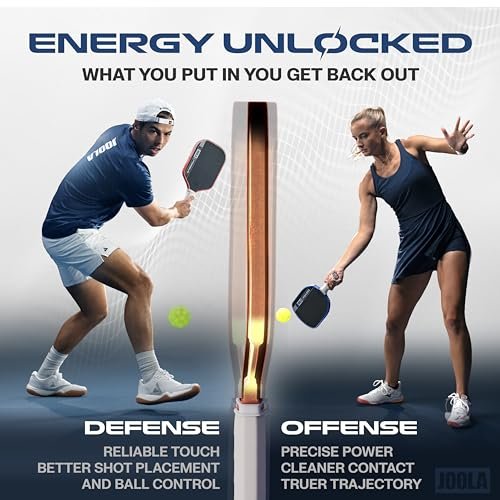
The Pro V’s KineticFrame is what you’re paying $300 for. The frame flexes slightly on ball contact and recovers instantly, which stabilizes exit trajectory on off-center hits. Every dink lands where you aimed it, even on contact toward the edge of the face. That’s the practical value of KineticFrame when you strip away the marketing language.
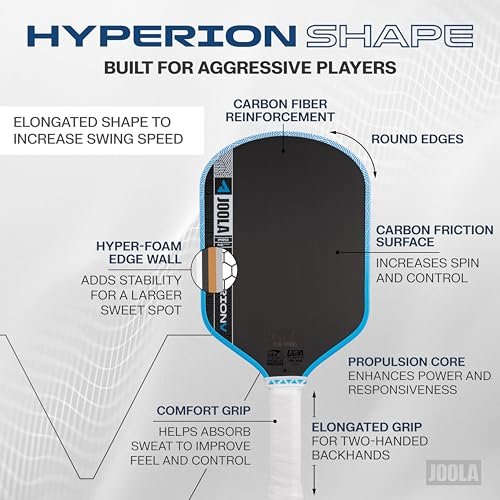
The hybrid shape at 16.3 inches by 7.7 inches blends reach and sweet-spot size better than a pure elongated shape. Raw carbon face, 16mm core, both USAPA and UPA-A certified for all competitive formats. If paddle authentication matters at your events, the NFC chip handles that.
Be honest about who needs a $300 control paddle. If you’re a 4.5 player competing in DUPR-rated events or regional tournaments, the consistency advantage from KineticFrame is real and the price is justified. If you’re a 3.5 club player who plays twice a week, the SLK Halo Max at $140 closes most of that gap. The Pro V is the right paddle for players who have already outgrown cheaper options, not for players who want to feel like they have.
| ✓ Pros | ✗ Cons |
|---|---|
| KineticFrame stabilizes exit trajectory on off-center contact | $300 is hard to justify below 4.5 level |
| Hybrid shape blends reach with a usable sweet spot | Players who generate pace through power technique may find the control bias limiting |
| USAPA and UPA-A certified for all competitive play formats | |
| NFC chip for paddle authentication at events |
7. 11SIX24 Jelly Bean – Best Budget
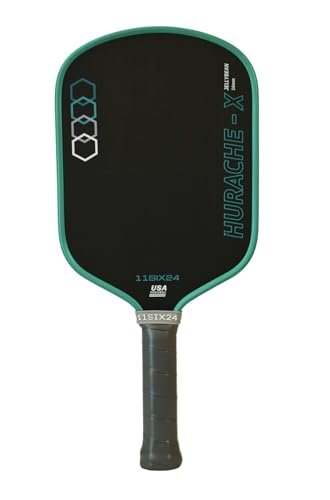
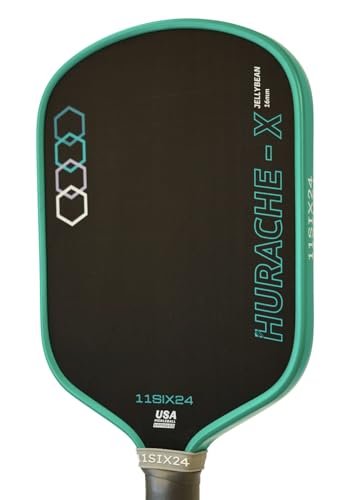
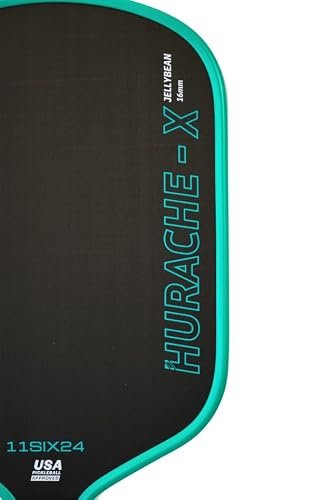
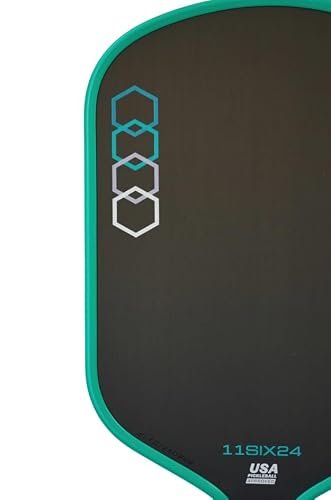
At $99, the Jelly Bean is the only paddle in this lineup under $100. The dual-density CFC face (carbon fiber composite) dampens vibration more than a standard single-layer carbon face, which improves feel on touch shots at the kitchen.
Available in Vapor (Hybrid) and Pegasus (Widebody) shapes. The Vapor is the more versatile choice for players who mix drives and dinks. The Pegasus suits kitchen-heavy players who prioritize sweet-spot size. USAP approved for sanctioned play.
This is the right choice if you’re on a $99 budget and want genuine carbon-face control. The trade-off against the SLK Halo Max at $140 is less spin texture and a smaller sweet spot. If you can stretch $40 more, the Halo Max is the better long-term paddle. But the Jelly Bean delivers real control performance at $99, and that is not easy to find.
| ✓ Pros | ✗ Cons |
|---|---|
| Most affordable carbon-face control paddle in this lineup at $99 | Less spin texture than raw carbon options at higher price points |
| Dual-density CFC face dampens vibration for better kitchen feel | Smaller sweet spot than the SLK Halo Max at $140 |
| Available in two shapes (Vapor Hybrid, Pegasus Widebody) | |
| USAP approved for sanctioned play |
Frequently Asked Questions
What is the difference between a control and a power paddle?
Core thickness is the main variable. Power paddles typically use a 14mm core, which pops the ball off the face quickly. Control paddles use a 16mm core, which gives the ball more contact time with the face before it leaves. That extra dwell time lets you adjust your shot angle later in the swing. Face material matters too: carbon fiber surfaces grip the ball on contact and generate more spin than fiberglass.
Is a 16mm paddle too slow for drives?
Not for club-level play. You’ll give up some pop on flat drives compared to a 14mm paddle, but the trade-off is significantly more control on dinks, resets, and third-shot drops. Most 3.5 to 4.0 players benefit more from the extra control than they miss the extra pop. At 4.5 and above, if you generate pace from your technique rather than your paddle, a 16mm core handles drives fine.
What paddle core is best for dinking?
16mm polymer or foam cores are both solid for dinking. The difference is feel: polymer honeycomb (most of this list) is consistent and predictable. Foam cores (the Friday Aura is the example here) are softer and more forgiving on mishits. If your kitchen game is already reliable and you want predictability, polymer is the standard choice. If you’re still working on consistent dink placement, foam gives you more margin.
Do pros use control paddles?
Yes. Ben Johns uses a 16mm Hyperion-shaped paddle, which is why this list includes the Hyperion 3S. Most tour pros play kitchen-heavy doubles at a level where control and touch dictate points, so 16mm paddles are the dominant choice on tour. The difference is that pro-level players generate pace from their technique, not their paddle, so a 16mm core doesn’t cost them power.
Should I choose a widebody or elongated shape?
Widebody paddles (the SLK Halo Max, the Jelly Bean Pegasus) give you a larger sweet spot, which helps on resets when you’re not perfectly positioned. Elongated shapes (the Hyperion 3S) give you more reach on ATP and erne attempts but a smaller sweet spot in the kitchen. Hybrid shapes split the difference. If your game is mostly kitchen-heavy doubles at 3.5 to 4.0, widebody is the safer choice. At 4.0 and above, if you’re making aggressive erne and ATP plays, elongated or hybrid works better.
Final Verdict
Two paddles worth mentioning did not make this list because they’re not sold on Amazon. The Bread and Butter Loco (16mm, around $199 direct from bnbpickleball.com) was named Paddle of the Year by multiple outlets in 2025 and uses a dual-density foam core in three shapes. The CRBN TruFoam Genesis (around $279 direct from crbnpickleball.com) introduced 100% foam-core construction and remains the benchmark for Gen 4 dwell time. If you’re willing to buy direct from the brand, both are worth considering.
If your game is kitchen-heavy and you play at 4.0 or above, the Selkirk Vanguard Control is the paddle on this list. Four-layer carbon face, non-thermoformed construction, and dwell time that changes how you play resets. At 3.5, or if $249 is not where you want to be, the SLK Halo Max gives you a larger sweet spot and genuine control performance at $140. The rest of this lineup fills specific gaps: the Hyperion 3S for reach, the Double Black Diamond for long-session fatigue, the Friday Aura for Gen 4 foam feel at $119, the Pro V for tournament-grade consistency, and the Jelly Bean for players on a $99 budget.